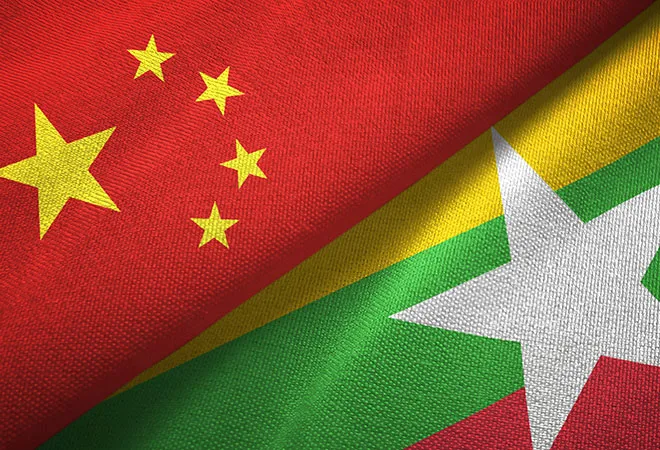
Five years after the 2021 coup, the dust is settling on a political landscape that looks increasingly like it was designed in Beijing rather than Naypyidaw. Recent admissions from Chinese officials suggest that Myanmar’s latest election cycle is not merely a domestic affair, but the result of a strategic understanding between President Xi Jinping and Senior General Min Aung Hlaing.
While Beijing publicly maintains its stance of “non-interference,” its fingerprints are all over the current political transition. The goal? A stable, pro-China central government that is immune to Western influence and firmly anchored in what insiders call the “51 Percent Formula.”
The 51% Mathematics of Power
According to an advisor to the military-led Election Commission, China’s vision for Myanmar is a hybrid democracy that functions like a one-party state. The math is simple but effective:
25% Military Seats: The constitutional block that remains unchanged. 26% Pro-Military Civilian Seats: Led by the USDP and hand-picked ethnic parties that align with military policy. Total: 51%: A guaranteed majority that ensures legislative stability and the protection of Chinese interests.
“Beijing wants a multi-party system on paper, but a single-party efficiency in practice,” the advisor told the BBC. This ensures that major contracts, budget approvals, and strategic projects—like the China-Myanmar Economic Corridor (CMEC)—face no hurdles in parliament.
Why China Chose the Generals over the NLD
The shift toward the military is not necessarily born of ideological love, but of strategic mistrust. Sources close to the Chinese Embassy reveal that Beijing always harbored doubts about the NLD’s commitment to the “One China Policy,” particularly regarding Taiwan.
Furthermore, the NLD’s meticulous scrutiny of large-scale infrastructure projects was often viewed in Beijing as an “obstruction” rather than transparency. In the military, China sees a partner that is increasingly dependent and therefore more reliable.
Investing in the “Fourth Generation”
China isn’t just looking at the present; it’s hedging its bets on the future. During the Senior General’s high-profile visit to China in August 2025, he notably introduced what analysts call the “Fourth Generation” of military leadership.
Key figures like General Kyaw Swar Linn (tipped as a future Commander-in-Chief) and Lt. Col. Kyaw Zaw Ye (a close advisor) were part of the delegation. By fostering ties with these younger officers, Beijing is building a long-term bridge that ensures its influence survives beyond the current leadership.
Stability Through Dependence
In a recent analysis for Foreign Affairs, researcher Amara Thiha noted that China’s strategy is to “create stability through dependence.” By being the primary investor, trade partner, and diplomatic shield for Myanmar, Beijing has created a scenario where the central government cannot survive without its neighbor’s support.
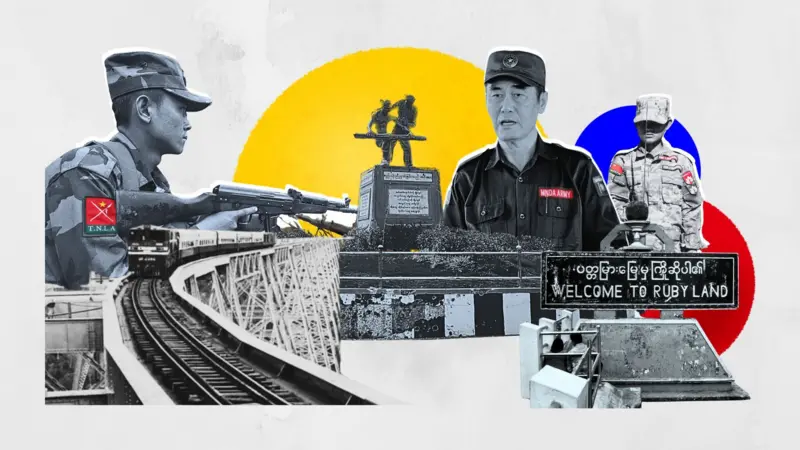
However, this is a high-stakes balancing act. While China strengthens the center, it also maintains tight control over Ethnic Armed Organizations (EAOs) like the MNDAA, TNLA, and the powerful UWSA along its border.
The Verdict: A Controlled Democracy
The West has dismissed these elections as a “sham,” and ASEAN remains skeptical. But for Beijing, legitimacy is secondary to stability. As long as Myanmar remains a reliable corridor to the Indian Ocean and a buffer against Western interests, China is willing to bet on this hybrid political model.
In the chaotic theater of Myanmar’s civil war, Beijing is no longer just a spectator—it is the director, the scriptwriter, and the most influential critic.