Seventy years ago, in the halls of the Bandung Conference, Myanmar (then Burma) stood as a titan of diplomacy. Alongside giants like Nehru and Zhou Enlai, Prime Minister U Nu helped architect the Five Principles of Peaceful Coexistence. For a young nation recently freed from the shackles of British colonialism, “Independent and Active Non-Alignment” wasn’t just a policy—it was a survival kit.
Today, as we look at the shattered landscape of 2026, the irony is stark. The nation that once mediated global conflicts and produced a UN Secretary-General (U Thant) is now the very “Sick Man of Asia” that the world struggles to heal.
A History of “Armed Neutrality”
The editorial history of Myanmar’s foreign policy is one of constant tension between domestic strife and global positioning.
- The Cold War Era: While the world split between Washington and Moscow, Myanmar attempted to walk a tightrope. Yet, internal insurgencies and the KMT incursion forced the military to expand, eventually leading to the 1962 coup and decades of isolationism.
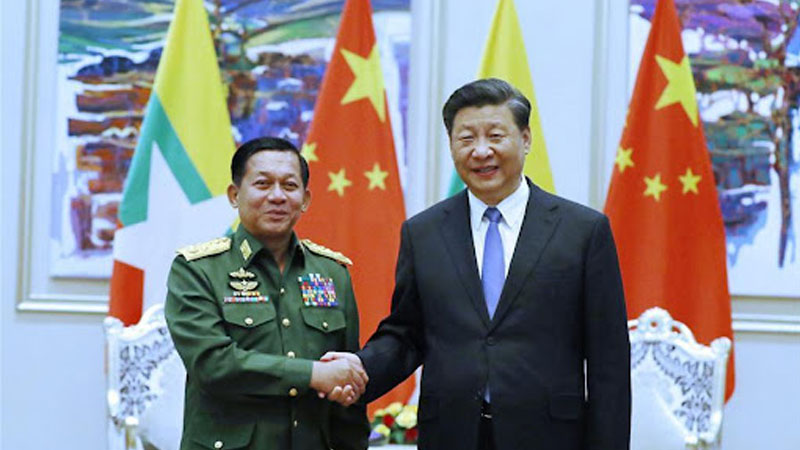
- The 1988 Pivot: After the brutal crackdown on the pro-democracy movement, the West turned its back. This forced the military regime into a “Pauk-Phaw” (sibling) embrace with Beijing—a relationship born out of necessity rather than choice.
The 2021-2025 Quagmire: A New Level of Complexity
The post-2021 coup era has redefined Myanmar’s geopolitical significance. Unlike the isolation of the Ne Win era, the current crisis is hyper-connected:
- Operation 1027 & The China Factor: The spectacular gains by the Brotherhood Alliance in Northern Shan State exposed a shift. Beijing’s frustration with online scam syndicates (Kyat-Phant) proved that “Non-Interference” has its limits when Chinese interests are at stake.
- The Great Power Tug-of-War: While the SAC (State Administration Council) leans heavily on Russian hardware and Chinese diplomatic cover, the opposition NUG seeks legitimacy in Western capitals. Myanmar has once again become a proxy battlefield for global influence.
- The Rare Earths & Energy Stakes: As of late 2025, the global scramble for rare earth minerals and the strategic importance of the Kyaukphyu Sea Port have turned Myanmar’s soil into a high-stakes gambling table for India, China, and the West.
The “Bandung” Shield: A Tool for Repression?
The most controversial aspect of our modern foreign policy is the weaponization of the “Non-Interference” principle. From the Rohingya crisis to the current civil war, successive administrations—both civilian and military—have used the Bandung principles as a shield to deflect international accountability for human rights violations.
“Is ‘Non-Interference’ a principle of sovereignty, or a license for domestic impunity?” This remains the central question for the Myanmar people.
Editorial Conclusion: The Way Forward
As we mark seven decades since Bandung, Myanmar finds itself in a “knotted thread” . We are a nation that wants to lead in global peace but cannot find it within our own borders.
For Myanmar to truly regain its status as an “Independent and Active” player, it must realize that foreign policy begins at home. True neutrality cannot exist in a state of perpetual civil war. Until the internal fractures are healed, Myanmar will remain a passenger in a vehicle driven by its neighbors’ interests.

Be First to Comment