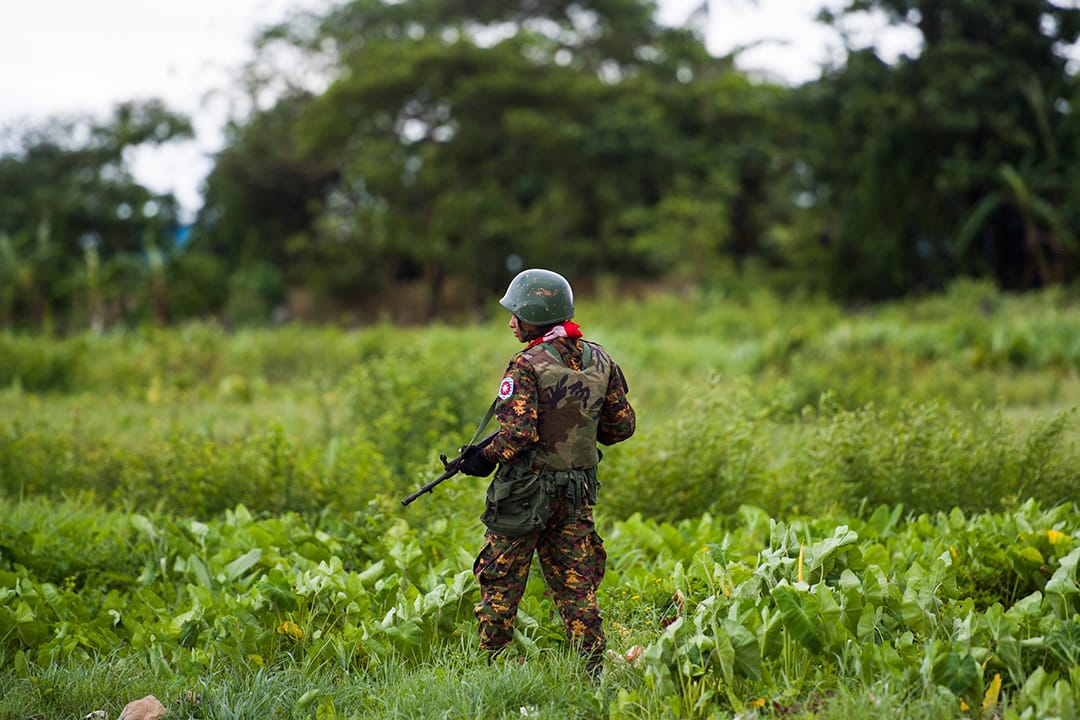
The landscape of the conflict in Myanmar has undergone a seismic shift, particularly within the coastal borders of Rakhine State. As the Arakkha Army continues its relentless push, capturing strategic battalion headquarters and entire townships, a singular question haunts the geopolitical discourse: will the Myanmar military eventually accept the loss of this territory, or is a catastrophic counter-offensive inevitable? To understand the military’s next moves, one must look beyond the immediate tactical defeats and examine the deep-seated institutional psyche and the historical patterns of an organization that views territorial concessions as a form of existential suicide.
The Doctrine of Inalienable Territory
The Myanmar military, or Sit-Tat, has historically operated under a doctrine that positions itself as the only glue holding a fractured union together. This “guardian” ideology means that in their view, no land is ever truly lost; it is merely “temporarily occupied” by insurgents. From the early years of independence when various rebellions threatened the central government, the military’s response has rarely been one of diplomatic compromise. Instead, they have historically favored a strategy of total exhaustion. Even when forced to retreat, their withdrawal is never a gesture of surrender but a recalibration for a future return. In the context of Rakhine, this means that even if every military outpost were to fall, the central command in Naypyidaw would likely continue to claim sovereignty over the state, maintaining a legalistic and psychological grip that precludes any formal recognition of Arakanese autonomy. This institutional stubbornness is rooted in the belief that granting autonomy to one region would trigger a domino effect, leading to the total disintegration of the nation-state as they define it.
Geopolitical and Economic Necessity
Beyond the ideological obsession with “non-disintegration of the union,” the practical motivations for holding Rakhine are immense. The state serves as Myanmar’s gateway to the Indian Ocean, a geographic reality that carries massive economic and geopolitical weight. The presence of the Kyaukphyu Deep Sea Port and the massive energy pipelines servicing China makes Rakhine a lifeline for the military’s international relevance. Control over these assets provides the military with leverage in its relationships with regional superpowers like China and India. Relinquishing Rakhine would not just be a loss of land; it would be the loss of the military’s status as a regional player. The revenue generated from offshore gas fields remains one of the few stable sources of foreign currency for a junta crippled by international sanctions. Therefore, the military perceives the loss of Rakhine as a direct threat to its financial survival and its ability to fund its war machine.
The Inevitability of Counter-Offensives
The question of whether they will fight back if given the opportunity is answered by their current tactical shifts and historical precedents. While ground forces have been depleted and morale is reportedly at an all-time low, the military is transitioning into a different kind of warfare—one defined by distance and destruction. By utilizing superior airpower and naval artillery, they have begun a campaign of systematic ruin. The objective here is not necessarily to re-occupy a village or a town immediately, but to ensure that the Arakkha Army cannot govern effectively. By destroying markets, hospitals, and infrastructure from the air, the military seeks to turn the liberated zones into humanitarian disaster areas, hoping that the burden of governance and the suffering of the civilian population will eventually erode support for the revolutionary forces. For the Sit-Tat, a territory they cannot control is a territory they must destroy.
Weaponizing Communal Fault Lines
Furthermore, the military has a long history of utilizing communal fault lines to regain a foothold. Rakhine State, with its complex demographic makeup and history of ethnic and religious tension, provides a fertile ground for such tactics. We are currently witnessing attempts to weaponize these long-standing animosities, forcing a situation where the military can present itself as the “necessary” restorer of order amidst chaos they helped facilitate. This strategy of “divide and rule” is a core component of their counter-insurgency manual. By instigating internal strife within the state, they aim to weaken the social cohesion that the Arakkha Army relies on, creating a vacuum that the military intends to fill once again. This psychological warfare is often more effective than traditional infantry movements, as it destabilizes the societal foundations of the resistance.
The Strategy of Attrition and Siege
Looking toward the future, the military’s actions will likely be characterized by a “siege and starve” mentality. They are currently clinging to coastal strongholds and urban centers like Sittwe, which serve as fortresses for their remaining administrative presence. They are unlikely to engage in a full-scale ground invasion in the short term due to manpower shortages across multiple fronts in Myanmar, but they will maintain a state of perpetual conflict. This strategy of attrition is designed to make the cost of independence so high for the Rakhine people that the dream of self-determination becomes overshadowed by the nightmare of endless bombardment and economic isolation. They are banking on the hope that the international community or the local population will eventually tire of the stalemate, allowing the military to negotiate from a position of renewed strength.
A War of Persistence
In conclusion, the Myanmar military’s withdrawal from large swaths of Rakhine should not be mistaken for a policy of abandonment. History teaches us that this is an institution that values the territory more than the people living upon it. They are currently in a phase of reactive survival, but their long-term goal remains unchanged: the eventual restoration of central authority through whatever means necessary, be it through scorched-earth policies, the instigation of communal violence, or the sheer exhaustion of their opponents. For the military, Rakhine State is an indispensable pillar of the nation-state they envision, and they will likely continue to wage a war of destruction until they can either rule it or ensure that no one else can. The struggle for Rakhine is thus not just a battle for land, but a clash between a fading centralist tyranny and an emerging vision of regional self-determination, with the military prepared to burn the state to the ground before they ever truly let it go.





Be First to Comment