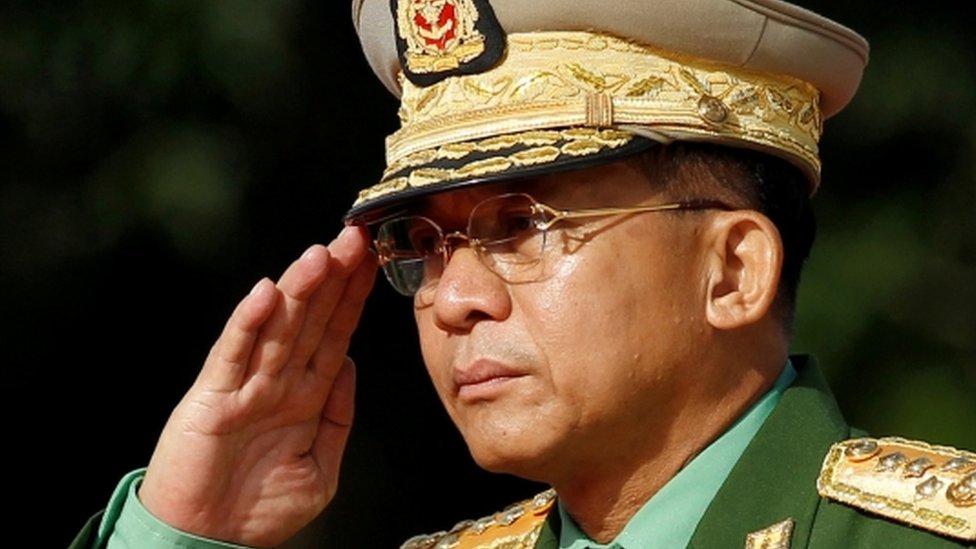
NAYPYIDAW, Myanmar — With the formation of the National Security and Peace Commission and looming elections, the question of who will inherit the commander-in-chief’s baton is no longer academic. As the military transitions toward a “Fourth Generation” of leadership, the internal race to replace Senior Gen. Min Aung Hlaing is becoming the most critical plot in Naypyidaw’s political theater.
The Heir Apparent: Gen. Kyaw Swar Lin
The name most frequently cited as the potential successor is Gen. Kyaw Swar Lin (DSA 35). Currently serving in high-ranking administrative and logistical roles, Kyaw Swar Lin is viewed as the “compromise candidate.”
His rise would serve two purposes:
- Protection for the Old Guard: He is seen as a loyalist capable of shielding Min Aung Hlaing from internal or external accountability post-retirement.
- Generational Bridge: As a graduate of DSA Intake 35, he represents a younger, more technocratic tier compared to the aging Third Generation, yet he is senior enough to command respect from the rising colonels.
The Power Bloc: The Rise of DSA 38
While Kyaw Swar Lin may take the top spot, the true “engine room” of the future military will likely be composed of DSA Intake 38 graduates. This group currently holds significant command positions and is being groomed for the highest echelons of the War Office. Key figures include:
- Lt. Gen. Ko Ko Oo
- Lt. Gen. Than Htaik
- Lt. Gen. Zaw Hein (currently overseeing the critical Yangon Command)
These officers are the “battle-hardened” generation who have managed the military’s survival through the post-2021 resistance. Their loyalty to the institution is absolute, but their willingness to remain under Min Aung Hlaing’s shadow after he moves to a civilian presidential role remains a point of intense speculation.
The “Shadow Commander” Scenario
Analysts warn that even if a new Commander-in-Chief is appointed, Min Aung Hlaing is unlikely to relinquish total control. By maintaining his chairmanship of the Military Commission, he could effectively function as a “Shadow Commander,” mirroring the Chinese model of the Central Military Commission.
In this scenario, the new chief would handle day-to-day operations, while Min Aung Hlaing retains the final word on promotions, strategy, and the use of the defense budget.
A Shift in Strategy?
The “Fourth Generation” faces a fragmented nation and a military that has lost significant territory. The next chief will have to choose between two paths:
- The “Hardline Continuity” Path: Doubling down on airstrikes and scorched-earth tactics to regain lost ground.
- The “Negotiated Survival” Path: Seeking a tactical “Thein Sein-style” de-escalation with ethnic armed groups to stabilize the central heartland and secure the military’s institutional survival.
The looming transition is less a standard succession than a high-stakes gamble for institutional survival. Whether the command falls to Gen. Kyaw Swar Lin or an unforeseen contender, the next chief will inherit a fractured “diminished statehood”—forced to navigate a collapsed national sovereignty while desperately clinging to the military’s fading mythos as the country’s ultimate power broker.



Be First to Comment