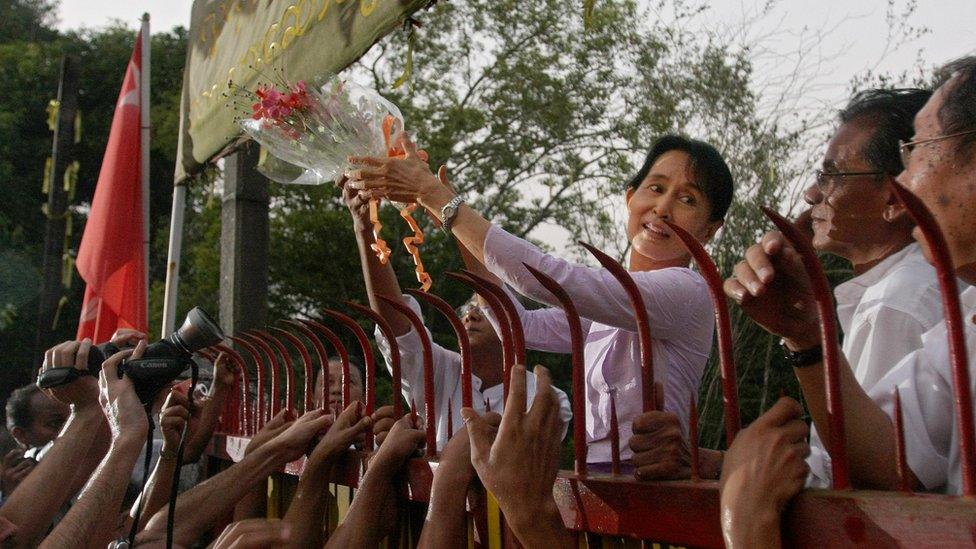
As Myanmar moves toward a military-led election in 2026, the international community is revisiting a familiar historical script. The central question remains: will the post-election landscape lead to the release of Aung San Suu Kyi, or is history destined to repeat itself in a cycle of detention and restricted liberty?
Echoes of 2010: A Historical Parallel
To understand the current situation, one must look back at the events of 2010. For years, Aung San Suu Kyi was held under house arrest, missing the 2010 general election—the first in two decades.
Just days after that election, which was widely criticized as rigged to favor military-backed parties, the authorities released her. At the time, her release served a dual purpose:
- Easing Sanctions: It acted as a catalyst for the West to begin lifting economic sanctions.
- Political Legitimacy: It provided the newly formed government under Thein Sein a degree of domestic and international breathing room.
Today’s observers are asking if a similar “strategic release” is being planned for 2026 to legitimize a new administration.
Comparing the Stakes: Then vs. Now
While the 2010 release offers a glimmer of hope, the political climate in 2026 is vastly more complex.
- The Scale of Conflict: Unlike 2010, the current internal resistance is widespread and armed. The military may view Aung San Suu Kyi’s influence as a greater threat to stability now than they did fifteen years ago.
- Legal Barriers: In previous decades, she was held under administrative detention without trial. Currently, she has been sentenced to decades in prison following a series of closed-door trials, making a “legal” pardon more complex than a simple expiration of house arrest.
International Media Perspectives
Global outlets like the BBC, CNN, and Al Jazeera continue to frame Aung San Suu Kyi as the “litmus test” for Myanmar’s democracy. International analysts argue that any election held while she and other political leaders remain behind bars will lack the “inclusivity” required to end the nation’s crisis.
For the military, the dilemma is profound: releasing her could de-escalate international pressure, but it could also provide a symbolic figurehead for the ongoing opposition movement.
The Diplomatic Waiting Game
Regional powers, particularly within ASEAN, are closely watching for any signs of leniency. Historically, the military has used Aung San Suu Kyi as a “bargaining chip” in high-level diplomacy. As the 2026 polls approach, the world is waiting to see if she will once again be moved from a prison cell to house arrest—or perhaps even granted a restricted form of freedom—as a gesture of “national reconciliation.”
A Cycle or a Breakthrough?
For Aung San Suu Kyi, the post-election period has historically been a time of transition. Whether 2026 follows the 2010 model of a strategic release or marks a departure into prolonged isolation will determine the trajectory of Myanmar for the next decade.
In the eyes of the world, as long as Aung San Suu Kyi remains a prisoner, the transition to civilian rule remains an unfinished story.





Be First to Comment