
MYITKYINA, Myanmar — The Myanmar military regime is taking active steps to resume the multi-billion dollar Myitsone hydroelectric project, a massive dam at the headwaters of the Ayeyarwady River that has been suspended for over 14 years due to widespread public outcry.
In a recent visit to the Kachin State capital of Myitkyina, Vice Senior General Soe Win met with local leaders and religious figures to outline plans for restarting the project following the regime’s proposed 2026 elections. According to sources present at the meeting, the junta and Chinese developers have reportedly signed a new Memorandum of Understanding (MOU) to move forward with a redesigned version of the dam.
Redesigning for Safety and Sovereignty
To address long-standing safety concerns, the regime claims the new design will feature a Concrete Face Rockfill Dam (CFRD) capable of withstanding an 8.5 magnitude earthquake. This is a critical point of contention, as the site sits just 30 kilometers (18 miles) from the volatile Sagaing Fault line.
“The Vice Senior General stated that the dam’s height would be significantly reduced from its original 980 feet to approximately 200 feet to minimize environmental impact,” a local source told news outlets. Furthermore, the regime claims the profit-sharing agreement with China’s SPIC (formerly CPI) has been renegotiated from an initial 90-10 split in favor of China to a 60-40 arrangement.
Geopolitical Leverage
The push to revive the $3.6 billion project comes at a time of deep domestic crisis for the military. Analysts suggest the move is a strategic overture to Beijing. By greenlighting China’s most significant energy interest in the region, the junta likely hopes to secure continued diplomatic and military support.
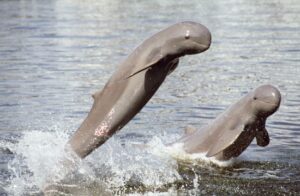
However, environmentalists and local ethnic leaders remain unconvinced. Experts warn that even a smaller dam would cause irreparable damage to the Ayeyarwady River’s ecosystem, disrupt fish migrations, and threaten the livelihoods of millions downstream. “This is not about electricity; it’s about a political trade-off with China at the expense of our national heritage,” said one environmental advocate.
The Resistance Factor
The project faces a formidable obstacle in the Kachin Independence Army (KIA), which currently controls vast territories surrounding the dam site. Colonel Naw Bu, a spokesperson for the KIA, reaffirmed the group’s stance: “We stand with the people. If the public rejects it, we reject it. We do not believe the community will ever accept this project.”
Despite the junta’s promises that the dam will resolve Myanmar’s chronic power shortages and prevent annual flooding in Myitkyina, the historical trauma associated with the project—including the forced relocation of thousands of villagers in 2009—remains a powerful catalyst for opposition.
As 2026 approaches, the Myitsone Dam stands as a flashpoint that could further ignite conflict in northern Myanmar, testing the limits of Chinese influence and the resilience of the local resistance.



Be First to Comment