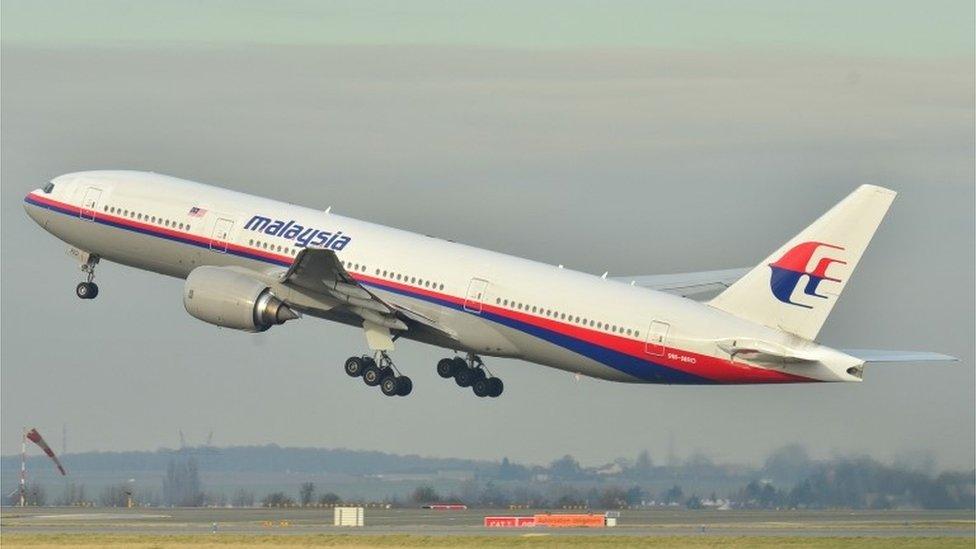
KUALA LUMPUR — As the world enters 2026, the Malaysian government has officially confirmed a renewed push to solve the greatest mystery in aviation history. Starting Dec 30, 2025, the marine exploration firm Ocean Infinity will return to the Southern Indian Ocean to begin a specialized 55-day underwater search for the wreckage of Malaysia Airlines Flight 370.
This mission follows a service contract initiated in March 2025. After months of preparatory data analysis and vessel positioning, the operation is now ready to deploy its fleet of autonomous underwater vehicles (AUVs) to map the most probable “priority zones” on the seafloor.
The Disappearance: A 12-Year Mystery
On March 8, 2014, the Boeing 777-200ER (Registered 9M-MRO) vanished during its flight from Kuala Lumpur to Beijing. With 239 lives on board, the aircraft’s sudden deviation from its path and its silent journey into the deep ocean have baffled investigators for over a decade.
Why 2026 is Different
The 2026 search isn’t just a repeat of previous efforts. It is driven by several new factors:
- Refined Satellite Analysis: Updated 3D mapping and “WSPR” (Weak Signal Propagation Reporter) data analysis have provided more specific coordinates for where the plane likely ran out of fuel.
- Advanced Robotics: Ocean Infinity is utilizing its latest generation of robotic “Armada” ships—vessels that can be operated remotely, allowing for much more extensive and cost-effective scanning of the seabed.
- The “No Find, No Fee” Deal: The Malaysian government maintains its commitment to the families by partnering with private firms under a performance-based contract, ensuring that the search remains focused and results-driven.
Searching for the Final Answer
The primary goal remains the recovery of the Flight Data Recorder (FDR) and the Cockpit Voice Recorder (CVR). Despite scattered debris washing up on the coasts of Africa and Reunion Island over the years, the main fuselage has never been found.
“Twelve years is a long time, but for the families, the search never truly stops,” a ministry official noted during the January update. “Providing closure is a debt we owe to those who were lost.”
As the vessels head out into the harsh conditions of the Indian Ocean later this month, the world watches to see if the technology of 2026 can finally provide the answers that 2014 could not.




Be First to Comment