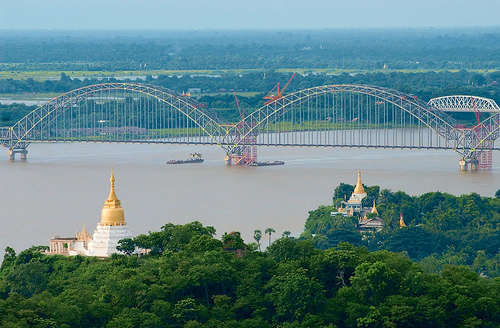
ANALYSIS — In the five years since the 2021 coup, the Sagaing Region has become the heart of Myanmar’s armed resistance. However, beneath the political struggle lies a rapidly destabilizing narcotics market. Reports from the ground indicate that the vacuum left by the collapse of central state authority is being filled by an illicit trade in cannabis and synthetic drugs—a crisis that the National Unity Government (NUG) is struggling to contain despite its claims of territorial governance.
1. From Subsistence to Commerce: The Rise of “Sagaing Green”
What used to be small-scale, hidden patches of cannabis have evolved into commercial-grade plantations in townships like Indaw, Ayadaw, and Budalin. Sources within the resistance and local communities confirm that the trade has become a vital, albeit illegal, source of income in a war-torn economy.
- Indaw Crisis: In Upper Sagaing, the addiction rate has reportedly reached middle-school demographics, with children as young as 13 and 14 falling victim to substance abuse.
- Institutional Failure: In late 2025, the NUG’s Ministry of Defense was forced to issue a “red alert” warning to its No. 2 Battalion (Katha District), threatening disciplinary action against personnel involved in the cultivation or sale of drugs.
2. The NUG: A Shadow Government Grappling for Control
The National Unity Government (NUG)—formed by ousted parliamentarians as a parallel administration to the military junta—claims to govern these territories. However, the narcotics surge highlights the NUG’s “diminished statehood.” While it issues directives from its “office,” it lacks the centralized police power to enforce them across a fragmented landscape of local defense forces.
A confidential NUG memo obtained in December 2025 admits to an “alarming increase” in drug-related crimes within its controlled zones. The government’s challenge is two-fold: it must eliminate the trade to maintain moral legitimacy, yet it risks alienating local units that may rely on the trade for logistical funding.
3. The Transit Corridor: From Shan State to India
Sagaing has evolved into a strategic bridge for international drug cartels. Intelligence suggests two primary funnels for Ketamine (K), Yaba (WY), and the potent “Happy Water” (often referred to locally as “Gold”):
- The River Route: Moving from Northern Shan through Mandalay’s Thabeikkyin and Singu, then crossing the Ayeyarwady into Sagaing.
- The Trans-Regional Bypass: Flowing from Mogok through Banmauk, crossing the Chindwin, and exiting via Kalay and Tamu into the Indian market.
In townships like Kani, residents report that cannabis and pills are now sold as openly as betel nut in local stalls, with prices for high-grade products reaching up to 50,000 Kyats per gram.
4. The Credibility Gap
The arrest of PDF personnel in July 2025 by the Chin Defence Force (CDF) in Hakha—carrying billions of Kyats worth of meth and heroin—sent shockwaves through the resistance. The fact that the suspects carried official NUG battalion recommendation letters suggests that the narcotics trade is not just a civilian crime, but an institutional rot that has penetrated parts of the revolutionary infrastructure.
Conclusion
For the NUG, the narcotics crisis is more than a public health issue; it is a direct threat to its political survival. If the parallel government cannot transition from “issuing letters” to “enforcing laws,” it risks presiding over a collection of lawless corridors rather than a unified liberated state. As the conflict drags into 2026, the question remains: can the resistance police itself, or will Sagaing become the next great vacuum for Southeast Asia’s drug lords?




Be First to Comment