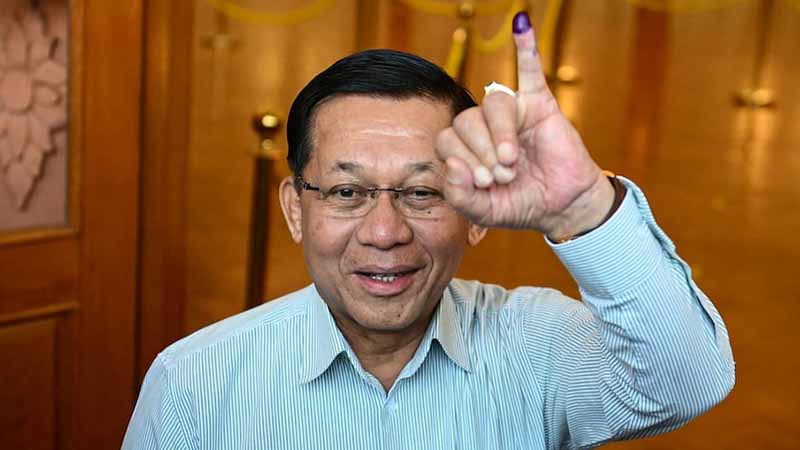
NAYPYIDAW, Myanmar — Following a multi-phase election largely criticized as a formality, Myanmar is approaching a critical political crossroads: the selection of a president by a reshaped Union Parliament.
Under the 2008 Constitution, the president is elected by the Pyidaungsu Hluttaw (Union Parliament), which consists of elected members and military appointees. However, due to cancellations in conflict-torn regions, the upcoming parliament will be smaller than its predecessors. Of the 664 original seats, only 588 will be filled, meaning a candidate needs at least 295 votes to secure the presidency.
The Numerical Advantage
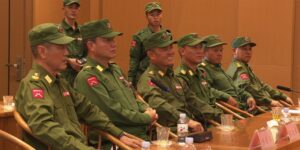
The military retains 166 non-elected seats (25% of the statutory total) across both houses. While 76 elective seats remain vacant due to security concerns, the military’s quota remains untouched. This gives the Commander-in-Chief a significant head start.
An elected bloc needs 422 seats to act independently, but with the opposition largely absent, the Union Solidarity and Development Party (USDP) and other military-aligned parties are expected to dominate the elected seats.
Key Figures and Rivalries
Three figures have emerged at the center of the political maneuvering:
- Senior Gen. Min Aung Hlaing: If the military chief seeks the presidency, he must be nominated as one of the three Vice Presidents by the military appointee bloc. Analysts believe he would only vacate his military post if a victory is guaranteed.
- U Khin Yi: The USDP Chairman, representing a party that fielded 421 candidates, follows the tradition of party leaders eyeing the top office.
- U Nyo Saw: A former general and key figure within the military commission, seen as a potential “bridge” candidate between the military and the civilian administration.
Possible Scenarios
Political observers point to three likely outcomes:
- Military-USDP Coalition: The most probable scenario, where military appointees and the USDP combine their votes to install a president, leading to a power-sharing arrangement.
- The Coalition Factor: If the USDP fails to win an outright majority, smaller parties like the NUP, PPP, or ethnic parties could become kingmakers, joining the military’s 166 votes to reach the 295-vote mark.
- A Guaranteed Transition: Given the controlled nature of the election, the final result is expected to be a pre-negotiated settlement ensuring the military’s continued central role in governance.
The Pyithu Hluttaw (Lower House), with 265 filled seats, will hold the most weight in determining which Vice Presidential candidate eventually ascends to the presidency. As the third phase of the election concludes, the focus shifts from the ballot box to the closed-door negotiations in Naypyidaw.


Be First to Comment