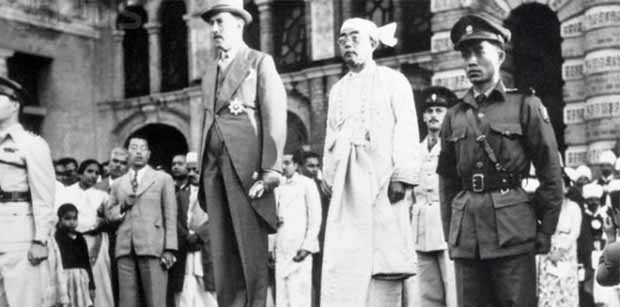
YANGON, Myanmar — On Jan. 4, 1948, as the Union Jack was lowered and the new flag of Burma rose in the cool morning air of Yangon, a young nation celebrated its escape from nearly a century of colonial rule. Today, 78 years later, that same nation marks its Independence Day not with a unified celebration, but amidst the smoke of a fractured state and a civil war that has redefined the meaning of freedom for generations.
The 78th anniversary of independence arrives at a time of unprecedented internal displacement and territorial fragmentation. While the military junta in Naypyidaw marked the day with a staged amnesty for over 6,000 prisoners—a recurring ritual aimed at easing international pressure—the reality on the ground reflects a country that has been at war with itself almost since the moment of its birth.
A Heritage of Conflict
Myanmar’s tragedy is often described as the world’s longest ongoing civil war. The conflict began just months after independence in 1948, as ethnic minorities and ideological factions took up arms against a central government they perceived as exclusionary.
Over the decades, the country has navigated a grim carousel of governance:
The Parliamentary Era (1948–1962): A fragile democracy undermined by insurrections and political infighting.
The Ne Win Era (1962–1988): A 26-year “Socialist” isolation that decimated the economy and solidified military dominance.
The SLORC/SPDC Era (1988–2011): Brutal military rule that suppressed the 1988 democratic uprising but paved the way for a managed transition.
The Decade of Reform (2011–2021): A “disciplined democracy” that offered a glimpse of the outside world before being abruptly cut short.
The 2021 Rupture and the Road to 2026
The Feb. 1, 2021, coup d’état by Senior General Min Aung Hlaing did more than just oust an elected government; it shattered the “Bamar-centralist” status quo. Unlike previous uprisings, the current resistance has seen a historic convergence between the Bamar majority and ethnic armed organizations (EAOs), united by a shared goal: the total removal of the military from politics.
The Shift to Stalemate
The rapid gains made by the Northern Brotherhood Alliance and their allies initially fueled speculation of an imminent junta collapse. However, as 2026 begins, the battlefield has evolved into a strategic stalemate. While the resistance maintains control over significant border territories and rural strongholds, the junta has managed to retake key cities, eg, Lashio
The conflict has transformed into a war of attrition. The military, bolstered by a mandatory conscription drive and improved drone capabilities, is focusing its dwindling resources on protecting its “citadels”—major cities like Yangon, Mandalay, and Naypyidaw.
The China Factor: A Stabilizing Pivot
A decisive element in this new phase of the war is the renewed role of Beijing. Shifting from a stance of cautious neutrality, China has increasingly pivoted toward stabilizing the military regime to protect its vast economic interests, including the multi-billion dollar oil and gas pipelines and the newly revived Myitsone Dam project.
Diplomatic sources indicate that China’s intervention was instrumental in brokering tactical ceasefires in Northern Shan State, effectively halting the resistance’s advance toward Mandalay. By clamping down on cross-border supplies to ethnic armed groups and officially observing the junta’s phased 2025-26 elections, Beijing has provided the regime with a much-needed lifeline of legitimacy and logistical breathing room.
“The wind shifted when Beijing decided that a junta collapse was a greater risk than a junta victory,” said a regional security analyst. “The support we see today is tactical; it’s about keeping the status quo from shattering.”
The Mirage of Elections
The military’s primary strategy for 2026 revolves around a “phased election,” a move widely condemned by the National Unity Government (NUG) and international observers as a sham designed to legitimize continued military rule. In many parts of the country, these polls are being held under the shadow of gunfire, with streets filled with soldiers rather than voters.
“Independence is a word that feels heavy today,” said a 24-year-old student in Yangon. “My grandfather saw the British leave. My father saw the 8888 uprising. I am seeing the cities bombed. We are still fighting for the same thing they were in 1948: a say in our own lives.”
An Uncertain Horizon
The humanitarian cost of this 78-year struggle is staggering. Over 3 million people are internally displaced, the middle class has been halved, and a “lost generation” of youth has traded classrooms for the jungle or exile.
Seventy-eight years later, Myanmar is a nation of many flags and many armies, still searching for the “Union” promised in 1948. The history of the next decade is currently being written not in the halls of Naypyidaw, but in the resilient spirit of a population that refuses to accept anything less than a permanent exit from military rule.




Be First to Comment