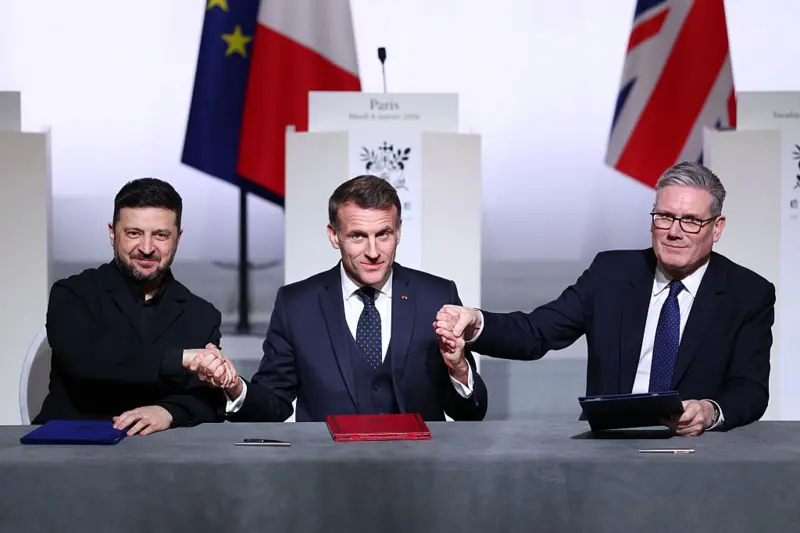
PARIS — In a major geopolitical shift aimed at securing a permanent end to the war in Eastern Europe, the United Kingdom and France have formally signed an agreement to deploy thousands of troops to Ukraine. Announced by British Prime Minister Sir Keir Starmer following high-level talks in Paris, the pact outlines a long-term military presence intended to safeguard Ukraine once a peace deal with Russia is reached.
The meeting, held under the banner of the “Coalition of the Willing,” brought together Ukraine’s closest allies to coordinate a security framework that prevents future Russian incursions.
The Deployment: Air, Sea, and Land
While the United States is expected to oversee the monitoring of a potential ceasefire, the European powers are stepping up to provide “boots on the ground” to guarantee territorial integrity.
- The Scope: French President Emmanuel Macron confirmed the mission would involve “thousands of personnel.”
- The Mission: Beyond a simple peacekeeping presence, the pact envisions established military headquarters across Ukraine. These bases will secure Ukrainian airspace and maritime borders while assisting in the reconstruction of the Ukrainian Armed Forces.
- The Goal: To create a deterrent so formidable that Russia will not attempt a repeat of the February 2022 invasion.
Navigating the Red Lines
The timing of the announcement is critical as Moscow continues to hold nearly 20% of Ukrainian territory. While the specific borders of a ceasefire remain the subject of intense debate, this pact signals that Europe is ready to back its diplomacy with military weight.
“We have signed a declaration of intent to deploy troops to Ukraine when a peace agreement is reached,” Prime Minister Starmer told reporters. “This ensures that British, French, and partner forces can be on the ground to protect the skies, the seas, and to help Ukraine’s future forces rise again.”
The View from Moscow
The Kremlin has previously warned that any foreign military presence on Ukrainian soil would be considered a “legitimate target” under international law. While Russia has yet to issue a formal response to the Paris declaration, the move is widely seen as a direct challenge to President Putin’s influence over Ukraine’s sovereign future.
As 2026 begins, the focus of the conflict is shifting from the trenches to the negotiating table—but with the added variable of a NATO-led European deterrent force ready to move in.




Be First to Comment